Future-Ready Campus
The Classroom of Tomorrow Begins with the University We Build Today.
The future of higher education requires more than digital platforms. It requires universities to rethink how students learn, how lecturers teach and how academic knowledge connects with the technologies transforming modern industries.
Through the Future-Ready University Partnership, MyUniversity and ERP Tohama work with participating institutions to modernize learning environments, strengthen digital infrastructure and create opportunities for more practical, collaborative and technology-enabled education.
Our approach combines fully equipped computer laboratories, smart classroom technologies, AI-assisted learning, digital collaboration and institutional employability systems into a coordinated university transformation programme.
We believe the university of the future should not simply deliver knowledge. It should provide an environment where students can explore, experiment, develop professional capabilities and prepare for a rapidly changing world.

Beyond smart classrooms
Building Learning Environments That Prepare Students for a World We Cannot Yet Fully Predict.
Artificial intelligence, automation and emerging technologies are reshaping professional responsibilities across nearly every industry.
Software developers are working alongside AI coding assistants. Engineers increasingly rely on simulation and digital design. Healthcare professionals use advanced diagnostic technologies, while financial and business professionals operate within complex digital systems.
Universities must prepare students not only to use today’s technologies but also to adapt as those technologies continue to evolve.
Our Future-Ready Campus vision emphasizes learning environments where technology supports critical thinking, practical experimentation, communication, collaboration and professional judgment.
A classroom should become a place where students actively apply knowledge, solve meaningful problems and develop the confidence to work with emerging technologies.
The objective is not to replace lecturers with technology. It is to equip educators and students with better tools and learning environments.
We Are Not Simply Building Smarter Classrooms. We Are Helping Universities Prepare for the Future of Education.
Future-Ready Infrastructure 01
Computer Laboratories Designed for Practical Learning.
Modern computer laboratories are essential environments for students studying technology, engineering, business, finance, data science and many other disciplines.
Yet practical learning can become difficult when students have limited access to suitable computers, software or reliable digital infrastructure.
Through our comprehensive university partnership, we work with institutions to plan and establish fully furnished computer learning environments appropriate to their academic and professional development priorities.
These environments are intended to support practical digital education, professional training and technology-enabled learning.

Capabilities We Support
Computer Workstations
Appropriately specified computers and workstations for practical learning, professional applications and relevant academic activities.
Furniture & Learning Environment
Suitable desks, seating and classroom arrangements designed to support comfortable individual and collaborative learning.
Networking & Connectivity
Local networking, internet connectivity and relevant infrastructure to support digital learning activities.
Professional Software Environments
Access to appropriate educational and professional software, subject to software licensing and programme eligibility.
Practical Technology Training
Facilities that can support selected programmes in software development, data analytics, enterprise systems, cybersecurity and other relevant disciplines.
Institutional Management
Agreed setup, administration and operational support arrangements to help participating universities manage the learning environment.
Benefits for Universities
- ●Expanded access to practical computer-based learning.
- ●Improved institutional capacity for professional technology training.
- ●Better support for selected academic and certification programmes.
- ●Learning environments designed around modern digital requirements.
- ●Stronger connections between theoretical education and practical application.
The number of laboratories, workstations, equipment specifications and installation requirements will be determined through the agreed institutional implementation plan.
Future-Ready Infrastructure 02
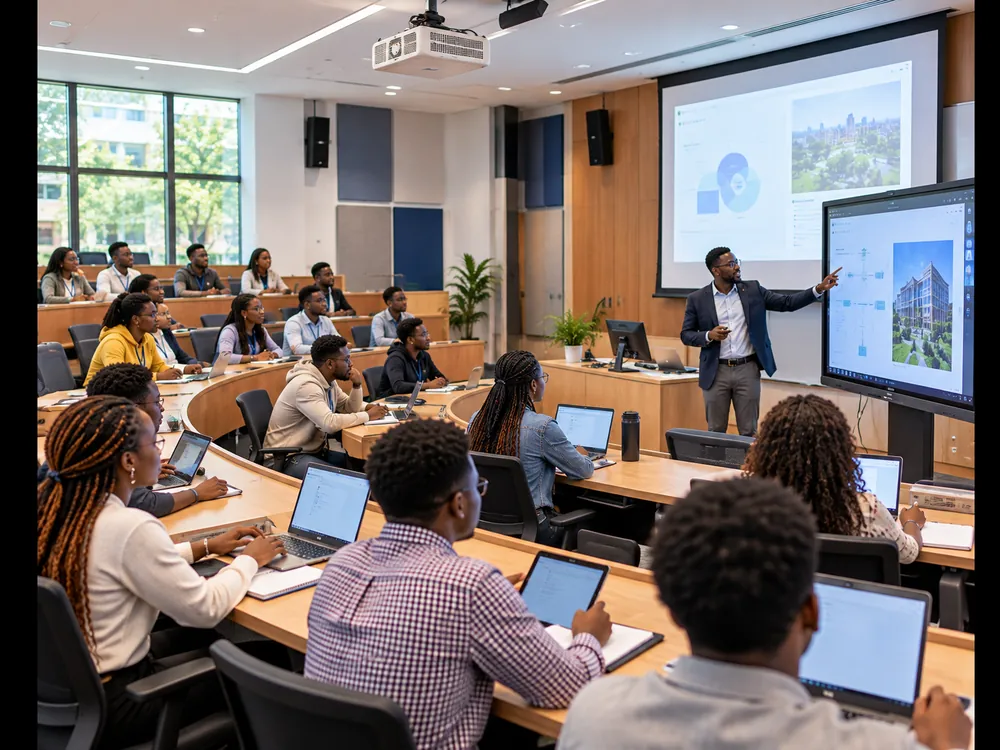
Transform Traditional Teaching Spaces into Connected Learning Environments.
A modern classroom should encourage interaction between lecturers, students, digital learning resources and the professional world beyond campus.
Smart classroom technologies can help institutions expand how learning materials are presented, discussed, recorded and shared.
Through the Future-Ready University Partnership, participating institutions can explore the introduction or enhancement of smart classroom capabilities in approved lecture halls and teaching spaces.
Capabilities We Support
Interactive Teaching Displays
Large digital displays and appropriate presentation technologies to support teaching and collaborative learning.
Classroom Audio Systems
Microphones, audio equipment and relevant voice-recording devices to support lecture delivery and approved recording activities.
Hybrid Learning Support
Digital collaboration capabilities that can enable authorized students, lecturers or external participants to join selected learning activities remotely.
Lecture Recording & Review
Appropriate tools to support recording, review and distribution of approved educational materials.
AI-Assisted Lecture Summaries
Where enabled, AI tools may assist in preparing lecture summaries for lecturer review and approval before information is shared with students.
Industry & Guest Participation
Connected learning environments can support guest lectures, professional seminars and approved sessions involving external industry specialists.
Benefits for Universities
- ●More flexible approaches to teaching and learning.
- ●Improved opportunities for digital content delivery.
- ●Better support for lecturer-student collaboration.
- ●Greater potential for approved hybrid learning programmes.
- ●More opportunities to connect students with external experts.
Technology Should Make Teaching More Engaging While Preserving the Academic Responsibilities and Professional Judgment of Lecturers.
Future-Ready Solution 03
Prepare Students and Lecturers to Thrive Alongside Artificial Intelligence.
Artificial intelligence is becoming part of the professional tools used across technology, business, engineering, healthcare and many other sectors.
As these tools evolve, universities face an important challenge: helping students understand how to use AI responsibly while maintaining strong analytical skills, independent reasoning and academic integrity.
Our Future-Ready Campus approach encourages institutions to explore practical and responsible AI adoption across teaching, learning and relevant administrative activities.

Areas of Focus
AI Literacy Across Disciplines
Students should understand the opportunities, limitations and responsible use of artificial intelligence within their chosen fields.
AI-Assisted Teaching
Lecturers may use appropriately approved tools to support lesson preparation, content organization, learning material development and selected educational activities.
Human-Centred Assessment
Universities can explore assessment approaches that emphasize reasoning, practical demonstration, critical analysis and the student’s own understanding.
Practical AI Applications
Learning environments can introduce relevant AI tools used in areas such as software development, analytics, enterprise systems and professional research.
Academic Integrity & Governance
AI adoption should be supported by institutional policies addressing academic responsibility, privacy, intellectual property, fairness and appropriate use of educational information.
Faculty Development
Lecturers and relevant university personnel can benefit from structured introductions to new learning technologies and practical guidance on responsible application.
Our Goal Is Not to Make Students Dependent on Artificial Intelligence. It Is to Help Them Develop the Knowledge and Judgment Required to Work Effectively in an AI-Enabled World.
Future-Ready Solution 04
Connect Your University Through Modern Digital Collaboration.
University teaching and administration depend on reliable communication, access to learning materials and effective coordination between departments, lecturers and students.
As part of the Future-Ready Campus programme, ERP Tohama can support eligible institutions with the setup and configuration of appropriate Microsoft 365 Education environments.
Microsoft 365 Education setup
Implementation Areas
Microsoft 365 Education Setup
Support eligible institutions with tenant setup, relevant account configuration and applicable educational licensing arrangements.
Microsoft Teams
Enable supported digital collaboration and communication capabilities for academic and administrative activities.
Outlook
Support institutional email and communication configuration according to the agreed implementation scope.
OneDrive & SharePoint
Assist with appropriate cloud-based file storage, information sharing and departmental collaboration.
Staff Training
Provide agreed training to relevant university personnel to support adoption and effective use.
Digital Learning Integration
Explore how supported Microsoft collaboration tools can complement the institution’s existing teaching and learning environment.
Microsoft educational licensing and product entitlements are governed by Microsoft’s applicable eligibility requirements and terms. Implementation, migration, integration and support services are defined separately in the university agreement.
Future-Ready Solution 05
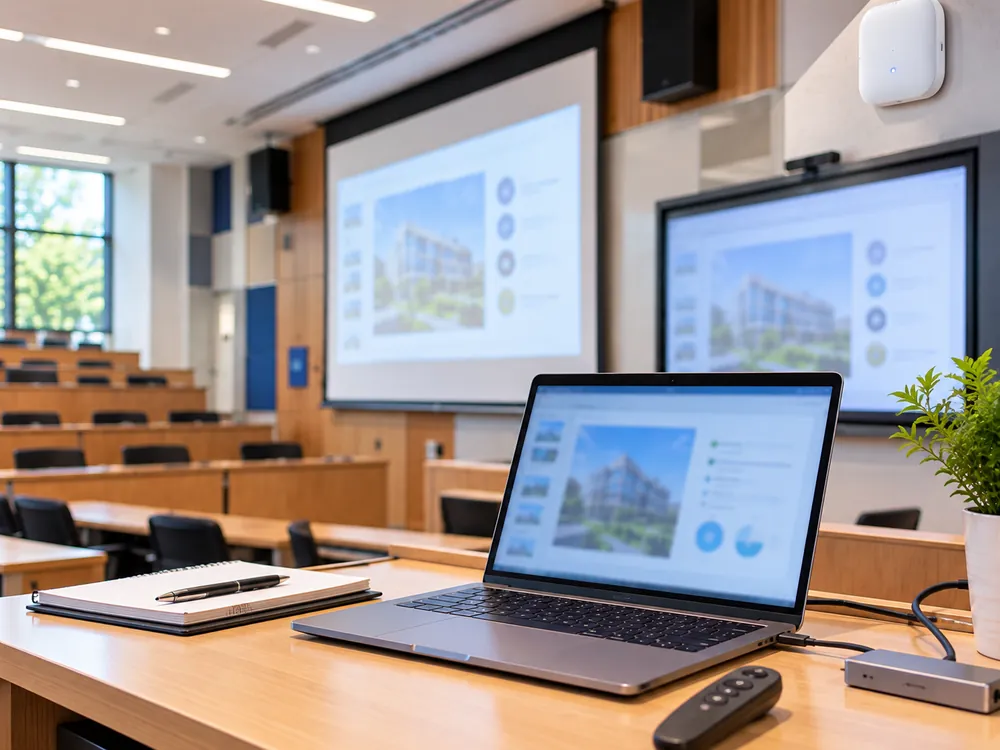
Build the Digital Foundation That Supports Modern Education.
Technology-enabled education depends on reliable infrastructure.
Modern classrooms, computer laboratories, collaboration tools and digital learning applications require appropriate connectivity, devices and technical planning.
Our Future-Ready Campus programme can include an agreed assessment and implementation of selected campus technology needs.
Capabilities We Support
Campus Wi-Fi
Plan appropriate wireless network coverage in selected university environments, subject to technical assessment and institutional infrastructure requirements.
Classroom Connectivity
Support networking and connectivity requirements for participating smart classrooms and computer laboratories.
Lecturer Devices
Provide agreed laptops or relevant teaching devices for participating lecturers according to the approved institutional equipment schedule.
Teaching Accessories
Introduce appropriate microphones, recording equipment and related smart classroom devices where included in the agreed scope.
Student Learning Devices
Where provided under the partnership agreement, limited allocations of student learning laptops or other devices may support designated educational activities.
Technology Maintenance
Establish agreed maintenance, support and device replacement arrangements for covered equipment.
Benefits for Universities
A planned approach to campus technology can help institutions support digital learning more consistently and reduce fragmentation between individual technology initiatives.
Designed for multiple disciplines
Learning Spaces That Evolve with the Needs of Different Professions.
Universities serve students preparing for a wide variety of careers. Future-ready infrastructure should therefore be adaptable to different learning requirements rather than assuming one technology model will suit every discipline.
Our long-term vision encourages universities to explore flexible learning environments that combine shared digital foundations with discipline-specific equipment and teaching approaches.
Software Engineering & Enterprise Technology
Practical environments supporting software development, artificial intelligence, enterprise resource planning, databases, data analytics and relevant digital applications.
Engineering & Applied Technology
Technology-enabled environments that may incorporate design software, simulation, engineering analysis and appropriate specialized equipment.
Health Sciences
Digital learning environments that can support approved simulations, visual learning, collaborative case discussions and technology-assisted healthcare education.
Business, Finance & Management
Learning spaces designed for practical applications involving enterprise systems, financial processes, analytics, digital business and professional collaboration.
Cross-Disciplinary Learning
Shared environments where students from different academic fields can collaborate on projects involving technology, research, innovation and real-world problem-solving.
These discipline-specific concepts are proposed areas for future institutional planning. Specialist equipment, simulation systems and curriculum-related implementation would require separate assessment and agreement.
The Future-Ready Campus Should Be Flexible Enough to Support Today’s Education and Adapt to Tomorrow’s Professions.
Connecting campus technology with employability
Technology Investment Should Create Opportunities Beyond the Classroom.
The MyUniversity advantage
A modern computer laboratory provides infrastructure. A smart classroom improves the learning environment. Digital collaboration tools support communication.
Their broader institutional value becomes clearer when these improvements are connected with practical learning and career-development opportunities.
Through the MyUniversity ecosystem, participating institutions can connect campus modernization initiatives with relevant employer engagement, student development and professional learning programmes.
- 01
Computer laboratory
Students using a computer laboratory may participate in relevant technology training or certification preparation.
- 02
Smart classroom
A smart classroom may host a company seminar involving professionals working in another country.
- 03
Department and career office
An academic department may use appropriate digital tools to support practical learning activities while the university career office coordinates related internship opportunities.
- 04
Graduate outcomes
Later, authorized graduate outcome information can help the institution understand the professional journeys of students who participated in these programmes.
This creates an opportunity to connect investment in teaching and learning environments with the university’s broader employability strategy.
Modern Infrastructure Should Support Learning, Industry Engagement and Long-Term Student Success.
Comprehensive institutional transformation
One Partnership. A Coordinated Approach to Digital and Campus Development.
The Future-Ready University Partnership
The Future-Ready University Partnership is designed for institutions seeking a broader transformation programme that combines digital university services with selected physical technology improvements.
Proposed investment
KES 4,200 per Student
Paid Once per Student, for Life
This one-time amount is used to support each student throughout their student life and after they graduate. The proposed per-student investment forms the basis for a comprehensive implementation arrangement, with the final scope determined through the university partnership agreement.
Digital Systems
- ●MyUniversity institutional platform.
- ●YoungBrain student career access.
- ●MyInternship student internship access.
- ●Career-office setup and training.
- ●Graduate employability dashboards.
- ●Tracer-study enablement.
- ●Agreed digital learning and collaboration setup.
Campus Technology
- ●Fully furnished computer laboratories within agreed specifications.
- ●Smart classroom implementation in approved spaces.
- ●Appropriate classroom teaching devices.
- ●Agreed campus Wi-Fi improvements.
- ●Relevant lecturer laptops.
- ●Agreed device support and maintenance.
- ●Limited student laptop allocations where included.
Institutional Enablement
- ●Implementation planning and governance.
- ●Functional and technical configuration.
- ●Staff training.
- ●Testing and university acceptance.
- ●Approved rollout and operational support.
Important programme conditions
The final number of participating students, minimum institutional commitment, equipment quantities, laboratory capacity, technical specifications, ownership arrangements, payment schedule and service commitments will be documented in the institutional agreement.
The KES 4,200 amount is the proposed programme rate and is paid once per student and should not be interpreted as an unlimited equipment or lifetime equipment-maintenance commitment.
From planning to university rollout
A Structured Transformation Journey for Your Institution.
A successful campus transformation programme requires clear institutional leadership, practical preparation, technology readiness and agreement on how the resulting systems will be operated.
Our proposed implementation follows five milestones.
- 01
Milestone 1: Preparation & Governance Readiness
Establish the institutional governance structure, confirm project responsibilities, assess relevant university requirements and agree on the implementation plan.
- 02
Milestone 2: Functional & Technical Setup
Prepare the MyUniversity environment, configure agreed access permissions and establish the technical foundation for planned institutional services before production use.
- 03
Milestone 3: Functional Testing & Institutional Readiness
Complete the agreed Microsoft 365 and smart classroom implementation activities, confirm lecturer device readiness and provide relevant university staff training.
- 04
Milestone 4: User Acceptance Testing
Conduct end-to-end testing with authorized university representatives, review applicable workflows and obtain formal acceptance of the agreed solution.
- 05
Milestone 5: Go-Live & Rollout Authorization
Obtain institutional authorization for production use and proceed with the approved phased or institution-wide rollout.
Post-launch support is provided according to the agreed service arrangements.
A partnership built around your university
Every Campus Is Different. Every Transformation Should Be Planned Accordingly.
Universities have different student populations, academic priorities, existing infrastructure and financial resources.
A successful transformation therefore begins with understanding what the institution already has, what it needs to improve and which investments are most relevant to its educational mission.
Before finalizing an implementation, our team works with authorized university representatives to review the proposed scope, infrastructure requirements, student coverage and institutional responsibilities.
We aim to establish a practical implementation programme with clear deliverables, appropriate technical planning and measurable acceptance criteria.
The objective is not simply to deliver equipment or install digital systems. It is to help participating institutions develop learning environments and connected services that can support students, lecturers and university leadership over time.
Frequently asked questions
Questions About Future-Ready Campus
What is included in the KES 4,200 per-student programme?
- The proposed programme combines institutional MyUniversity services with agreed campus technology and implementation activities. Exact laboratory equipment, smart classroom coverage, connectivity, lecturer devices, training and support commitments are established in the university proposal and contract.
Does every student receive a laptop?
- No. The programme may include limited student laptop allocations according to the agreed implementation scope. It does not automatically provide a laptop to every student.
Can our university use MyUniversity without buying new computer laboratories?
- Yes. Universities can explore the separate University Employability Partnership, which does not require participation in the comprehensive campus modernization programme.
Can existing laboratories be upgraded rather than replaced?
- Existing facilities can be assessed as part of the university consultation. Where technically and commercially appropriate, the implementation proposal may include upgrades rather than complete replacement.
Are Microsoft 365 licences included?
- Eligible Microsoft 365 Education products may be available under Microsoft’s applicable educational licensing arrangements. Licensing eligibility and entitlements are separate from MyUniversity implementation and support services.
Can the university choose which classrooms are upgraded?
- Classroom selection, the number of spaces and installation priorities are determined through institutional consultation and the agreed project scope.
Is lecturer training included?
- Agreed lecturer and university staff training forms part of the implementation plan. The scope, participants and training arrangements are confirmed in the partnership agreement.
Is the KES 4,200 fee paid annually?
- No. KES 4,200 is paid once per student, for life. It is used to support the student throughout their student life and after they graduate. It is paid by the university, and hardware and support are included. The payment schedule and any separately chargeable services are set out in the university agreement.
Can the university start with a pilot?
- A pilot can be considered depending on the selected solutions, technical requirements and commercial arrangements. A full infrastructure programme requires separately agreed deployment and equipment commitments.
Let us reimagine the future of your campus
Build the Learning Environment Your Next Generation Deserves.
The universities that shape tomorrow will combine academic excellence with technology, practical experience, industry collaboration and the ability to adapt to new ways of learning.
MyUniversity and ERP Tohama are working toward a future in which digital infrastructure and modern learning environments support institutions throughout the student journey.
Whether your university is planning new computer laboratories, exploring AI-enabled teaching, strengthening its digital collaboration environment or considering a broader campus transformation programme, we welcome the opportunity to understand your ambitions.

MyUniversity is live on the Microsoft marketplace.
MyUniversity — Beyond Education. Into Opportunity.